If you have ever ordered a cup of dark, earthy coffee in New Orleans, you have probably tasted chicory without even knowing it. Or maybe you flipped over a protein bar, saw “chicory root fiber” on the label, and wondered — what on earth is that? You are not alone. Chicory is one of those ingredients that has been around for centuries, yet most people cannot quite pin down what it is or why it keeps popping up in their food.
Let us fix that.
So, What Exactly is Chicory?
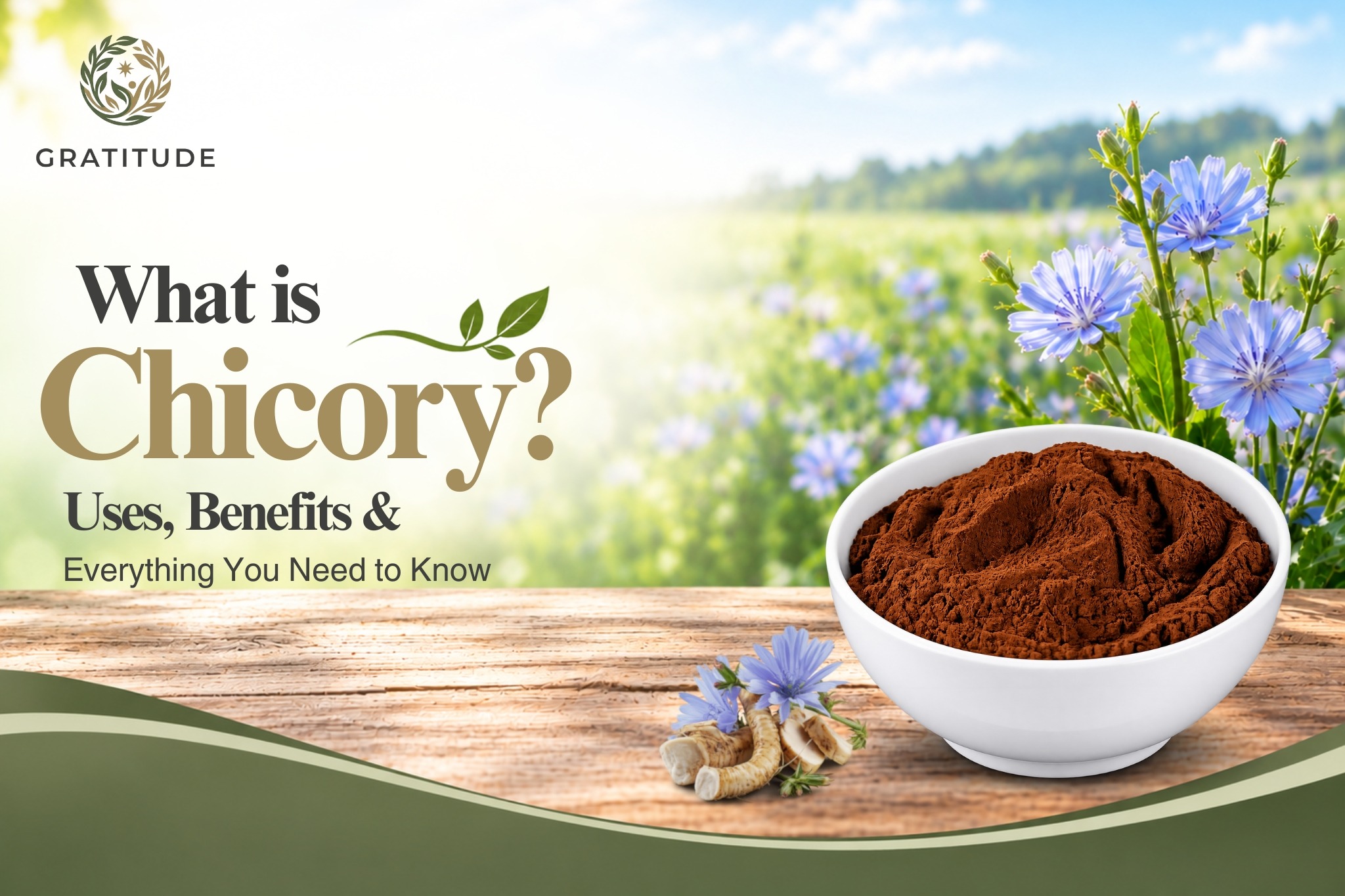
Chicory (Cichorium intybus) is a flowering plant from the dandelion family, native to Europe and now found growing wild across North America, Australia, and parts of Asia.[1] You have probably driven past it without a second glance — it is that scraggly roadside plant with pale blue flowers that open in the morning and close by afternoon.
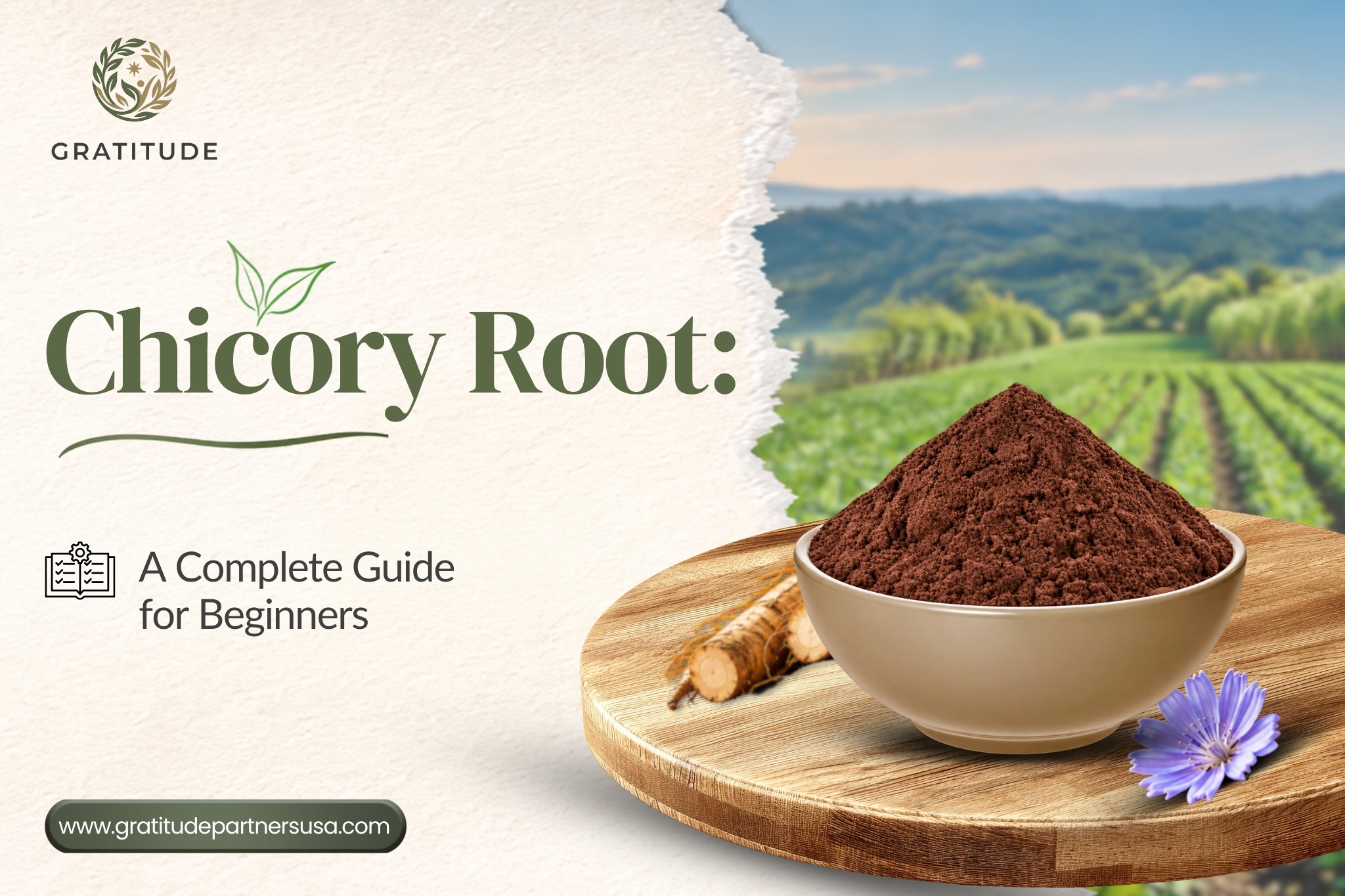
But the real story sits underground. The thick, fleshy taproot of the chicory plant is where most of its commercial value lies. When dried and roasted, this root produces a dark, bitter liquid that has been used as a coffee substitute and coffee additive for over two hundred years.[2]
There are two main types of chicory used commercially:
- Root chicory — grown for its root, which is processed into roasted chicory granules, chicory powder, and chicory extract for the food and beverage industry
- Leaf chicory — grown for its leaves, which include salad varieties like radicchio, Belgian endive, and catalogna[1]
For the purposes of this article, we are mostly talking about root chicory — the kind used in coffee blends, functional foods, and dietary supplements.
A Quick History: From Napoleon’s Blockade to New Orleans Coffee Shops
Here is where chicory’s story gets interesting.
In 1808, Napoleon imposed a Continental Blockade that cut off European access to coffee imports. France, a nation of coffee drinkers, needed a replacement — fast. Roasted chicory root, which brews into a dark, slightly bitter drink with a mild caramel note, became the go-to alternative.[2][3]
The habit stuck. French colonists carried it to Louisiana, and when the American Civil War hit, Union naval blockades choked off coffee supplies to the port of New Orleans. Locals started blending what little coffee they had with roasted chicory to stretch it further.[4] The famous Café Du Monde, which still operates today, has served its signature chicory coffee blend since 1862.
What is remarkable is that even after the war ended and coffee was easily available again, New Orleans kept its chicory tradition. It was no longer about scarcity. People genuinely liked the flavour — that deep, slightly woody, bittersweet taste that softens the sharp acidity of dark-roast coffee.[4]
Today, roasted chicory products are used by coffee companies, beverage manufacturers, and food processors across the United States and globally.
What is Chicory Root Made Of? (The Nutrition Side)
Chicory root is not just flavour. It packs a specific nutritional profile that has caught the attention of food scientists and nutritionists alike.
A 60-gram serving of raw chicory root contains roughly:[5]
| Nutrient | Amount |
|---|---|
| Calories | ~43 kcal |
| Carbohydrates | ~10.5 g |
| Dietary Fiber | ~1 g |
| Protein | ~0.8 g |
| Fat | ~0.1 g |
| Vitamin B6 | Small amounts |
| Potassium | Small amounts |
| Manganese | Small amounts |
But the headline nutrient in chicory root is inulin — a type of soluble prebiotic fiber. Depending on the variety and growing conditions, chicory root can contain anywhere from 12% to 20% inulin by fresh weight, and up to 68% of its dry weight.[6][7] That makes it one of the richest natural sources of inulin on the planet.
What is Inulin, and Why Should You Care?
Inulin is a fructan — a chain of fructose molecules linked together in a way that human digestive enzymes cannot break down.[8] So instead of getting digested in your stomach or small intestine, inulin passes through to the large intestine, where it becomes food for your gut bacteria.
This is what scientists call a prebiotic effect. The beneficial bacteria in your gut — particularly Bifidobacteria — feed on inulin and multiply. As they ferment the fiber, they produce short-chain fatty acids (SCFAs) like butyrate, which help maintain the integrity of your gut lining and reduce inflammation.[9][10]
If that sounds like a lot of biology, here is the simple version: inulin feeds the good bugs in your gut, and those bugs help keep your digestive system running smoothly.
Health Benefits of Chicory (What the Research Actually Says)
Let us be honest — the internet is full of overblown health claims about every “superfood” under the sun. So instead of hype, here is what peer-reviewed research and regulatory bodies have actually confirmed about chicory and its inulin content.
1. It Helps Keep You Regular
This one has the strongest evidence behind it. In 2015, the European Food Safety Authority (EFSA) approved a specific health claim for native chicory inulin: “Chicory inulin contributes to normal bowel function by increasing stool frequency.”[11] The approved daily intake for this benefit is 12 grams of native chicory inulin per day.[11]
That is a big deal. EFSA does not hand out approved health claims lightly — they require solid clinical evidence.
2. It Supports a Healthy Gut Microbiome
Multiple clinical trials have shown that chicory inulin selectively stimulates the growth of Bifidobacteria in the gut.[8][10] A healthy, diverse gut microbiome has been linked to everything from better digestion to improved immune function. While the word “prebiotic” itself is not an authorised health claim under EU regulations,[12] the scientific community widely recognises chicory inulin as one of the best-studied prebiotic fibers available.
3. It May Help with Blood Sugar Management
Some research suggests that inulin can improve insulin sensitivity and help moderate blood glucose levels after meals.[9][13] By slowing the absorption of sugar in the gut, inulin may help reduce those sharp post-meal blood sugar spikes. This is particularly relevant given how many Americans are managing pre-diabetes or type 2 diabetes.
That said, chicory inulin is not a medication. If you have blood sugar concerns, talk to your doctor.
4. It Might Support Weight Management
A few systematic reviews have found that regular inulin intake may help with modest reductions in body weight and BMI.[9] The thinking is that inulin promotes a feeling of fullness (satiety), which can help people eat less overall. Results here are promising but not yet definitive enough for any regulatory body to approve a weight-loss claim.
5. It Could Improve Mineral Absorption
There is early-stage evidence that the fermentation of inulin in the colon may help your body absorb certain minerals — particularly calcium and magnesium — more effectively.[7][8] More research is needed, but the mechanism makes biological sense.
A Note on Side Effects
Chicory inulin is generally safe for most people, but if you suddenly load up on it, you might experience gas, bloating, or stomach discomfort.[13] The trick is to start small and increase gradually. Your gut bacteria need time to adjust.
How is Chicory Used in the Food Industry Today?
Chicory has moved way beyond coffee. The food and beverage industry now uses chicory-derived ingredients in a wide range of products:
- Coffee and coffee alternatives — Roasted chicory granules and chicory powder are blended with coffee or brewed on their own as a caffeine-free alternative
- Protein and snack bars — “Chicory root fiber” on the label? That is inulin, added to boost the fiber count
- Dairy and plant-based products — Inulin serves as a natural fat replacer and texture enhancer in yogurts, ice creams, and plant-based milks
- Baked goods — Used to add fiber, reduce sugar content, and improve mouthfeel
- Functional beverages — Added to drinks positioned around gut health and digestive wellness
The global inulin market — most of which comes from chicory root — was valued at approximately USD 1.9 billion in 2025, with the food and beverage sector accounting for over 60% of total demand.[14][15] Chicory root alone supplies roughly 72% to 76% of the world’s inulin.[15]
The broader chicory market itself sits between USD 0.77 billion and USD 0.93 billion as of 2025, driven by rising demand for caffeine-free coffee alternatives, natural prebiotic fiber, and clean-label ingredients.[16]
Chicory in Everyday Life: Beyond the Factory Floor
You do not need to be a food manufacturer to enjoy chicory. Here are a few ways regular people use it:
- Morning coffee blend — Add a spoonful of roasted chicory powder to your coffee grounds before brewing. It rounds out the bitterness and adds depth without caffeine
- Caffeine-free evening drink — Brew chicory root on its own for a warm, coffee-like drink that will not keep you up at night
- Salads — Chicory leaves (radicchio, endive) add a pleasant bitterness to green salads
- Smoothie boost — Some people add chicory root fiber powder to smoothies for an extra fiber kick
How to Source Quality Chicory Products
If you are a food manufacturer, ingredient distributor, or beverage company looking for bulk chicory products, sourcing quality matters. Chicory root quality varies depending on origin, growing conditions, processing methods, and storage.
At Gratitude Partners USA, we supply roasted chicory granules, chicory powder, chicory cubes, and chicory extract to industrial buyers across the United States. Every batch ships with proper documentation and consistent specifications, so you know what you are getting.
If you want to test before you commit, we offer free chicory samples — no strings attached.
The Bottom Line
Chicory is not a fad ingredient. It has been feeding people and flavouring their drinks for centuries. What has changed is that modern science has finally caught up and started documenting what traditional cultures already knew — this humble root does a lot of good.
Whether you are a coffee roaster looking for a New Orleans-style blend, a food manufacturer adding prebiotic fiber to your product line, or just someone curious about what “chicory root fiber” means on a nutrition label, we hope this article gave you the full picture.
Got questions? Get in touch with us — we are happy to talk chicory all day.
References
[1] “Chicory,” Wikipedia, Wikimedia Foundation. https://en.wikipedia.org/wiki/Chicory
[2] “The History of Chicory Coffee,” Eats History. https://eatshistory.com
[3] “History of Chicory in Coffee,” Manual Coffee Brewing. https://manualcoffeebrewing.com
[4] “The Civil War’s Surprising Role in New Orleans Coffee Culture,” Smithsonian Magazine. https://www.smithsonianmag.com
[5] “Chicory Root: Nutrition Facts and Health Benefits,” Healthline. https://www.healthline.com/nutrition/chicory-root-fiber
[6] “Inulin and oligofructose: review of experimental data on immune modulation,” National Institutes of Health (NIH), PubMed Central. https://pubmed.ncbi.nlm.nih.gov
[7] “Chicory Root and Inulin,” Food and Agriculture Organization (FAO). https://www.fao.org
[8] “Chicory Root Fiber: Health Benefits and Uses,” Medical News Today. https://www.medicalnewstoday.com
[9] “Systematic Review and Meta-Analysis of Inulin-Type Fructans on Metabolic Parameters,” MDPI (Multidisciplinary Digital Publishing Institute). https://www.mdpi.com
[10] “Inulin and gut microbiota composition — a systematic review,” Oxford University Press (OUP), The Journal of Nutrition. https://academic.oup.com
[11] Commission Regulation (EU) 2015/2314 of 7 December 2015 authorising a health claim on native chicory inulin. Official Journal of the European Union. https://eur-lex.europa.eu
[12] “EU Health Claims and Prebiotics — Regulatory Status,” Food Compliance International. https://foodcomplianceinternational.com
[13] “Inulin: Uses, Side Effects, Interactions,” WebMD. https://www.webmd.com/vitamins/ai/ingredientmono-1048/inulin
[14] “Inulin Market Size, Share & Trends Analysis Report,” Fortune Business Insights. https://www.fortunebusinessinsights.com
[15] “Inulin Market Report,” Business Research Insights. https://www.businessresearchinsights.com
[16] “Chicory Market Size & Share Analysis,” Mordor Intelligence. https://www.mordorintelligence.com